The late Anthony Bourdain once observed: ‘In England man, it’s like 1986 over there. Everyone’s doing charlie. I really hope I never spoke like they do. Every other word is an endless stream of bullshit. Yammering half drunk… God I get contact paranoia just going over there.’ Not an encouraging endorsement from a man who was once an addict himself. But he’s not wrong. The Guardian reported that more than 6.2% of all 15 to 34-year-olds in the UK confess to using cocaine in the past year,
We have the dubious accolade of cocaine capital of Europe, and the problem is only getting worse.
Cressida Dick, head of the Met, lays the blame squarely on the middle classes, who are operating on double standards of lauding fair trade coffee and veganism, only to blithely pick up a few grams on a weekend, blind to the damage this causes down the supply chain, such as fuelling the culture of gangs and associated knife crime.
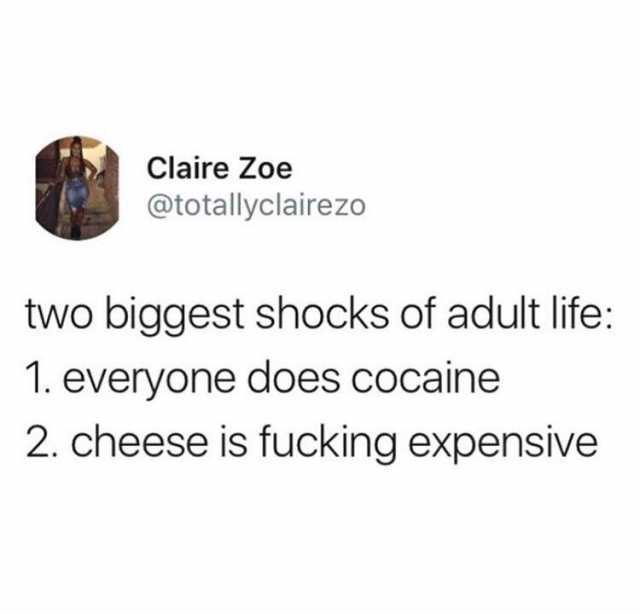
Whether it is leading to an increase in knife crime to the extent Dick suggests or not, it’s normalisation amongst middle class millenials is undeniable. Tweets and instagrams from influencer accounts that are instantly ‘relatable’ pump out ‘LOL’ quotes about cocaine use to their burgeoning groups of followers. Drug dealers are using niceties such as ‘Regards’ to butter up posho customers over Whatsapp. In the city, cocaine use is ‘rife,’, building on the long standing philosophy of ‘work hard, play hard’. Journalist Dolly Alderton cheerfully admits in her memoir, Everything I know about Love, that she built up a familiar rapport with a ‘charming’ middle class drug dealer named Fergus. In short cocaine is being referenced in popular culture and normalised as just something everyone ‘does.’ After all, no one is addicted right? Cocaine is ‘only ever a vehicle to carry on drinking’ and to keep the evening going. It’s the inevitable conduit to making a new friend at a party. It’s the pleasure of the ritual, holed up in a loo or an upstairs bedroom.
But what Cressida Dick failed to highlight, is that it’s not just the middle class millenials that are at it. Cocaine use spans social and demographic divides. The drug is certainly no stranger to the football stadium- a video of fans on the pitch at Tottenham snorting lines spawned the Daily Mail headline ‘White Hart Line.’. And as Gordon Ramsay’s recent documentary uncovered, everyone in the restaurant trade is supposedly ‘at it’ both in and out of the kitchen. Scratch beneath the service of any industry, talk to anyone in a pub on a Friday night, these exposés suggest, and you’ll find a culture of recreational cocaine use that is barely concealed.

So what it is it about the British and cocaine? There’s surely something deeper at play here than a simple desire to carry on the party. It is inextricably linked to our relationship with alcohol, and of course, social anxiety. Adrian Chiles summed it up well in his programme exploring his own penchant for booze. He asks the valid question, “If we don’t like ourselves, what do we do to be likable?” Instead of seeing each other soberly on a Tuesday, everyone is staying in more during the week, and relying on cocaine to fuel pub session conversations on a Friday.
It’s no surprise then, that along with cocaine use, anxiety issues are going through the roof. As the Raleigh House charity notes: ‘When it comes to cocaine and anxiety, it’s a bit of a chicken-and-egg situation. Some get hooked on cocaine because they find it relieves their anxiety. Others develop severe anxiety once they start using cocaine.’ The hedonism of the weekend gives way to the hell of a Monday morning. I spoke to one user who described almost having a panic attack over a powerpoint presentation after a particularly heavy weekend: ‘It rendered me incapable.’
The two problems are living off each other in a vicious circle.
And if the disgusting, but fascinating, fatberg on stage at the Museum of London has told us anything, it’s that London is a city on the hunt for highs, healthy or otherwise. When analysed, it contained a concerning amount of sports enhancers, cocaine and MDMA. Irvine Welsh, not adverse to a line of cocaine himself, admitted to approaching exercise with the same verve and enthusiasm as drug-taking, praising the ‘buzz’ it gave him. Yet again it highlights that the search for ‘wellness’, and a need to sweat out the weekend’s excesses of unbridled hedonism, have led to a significant portion of the country being permanently stuck on a wheel of self care vs. self destruction. Wellness trends will come and go, but until we,as a nation, don’t see the end to a hard week at work being the bottom of a glass of wine or a rolled up note, little is going to change.
 KdotMusings